
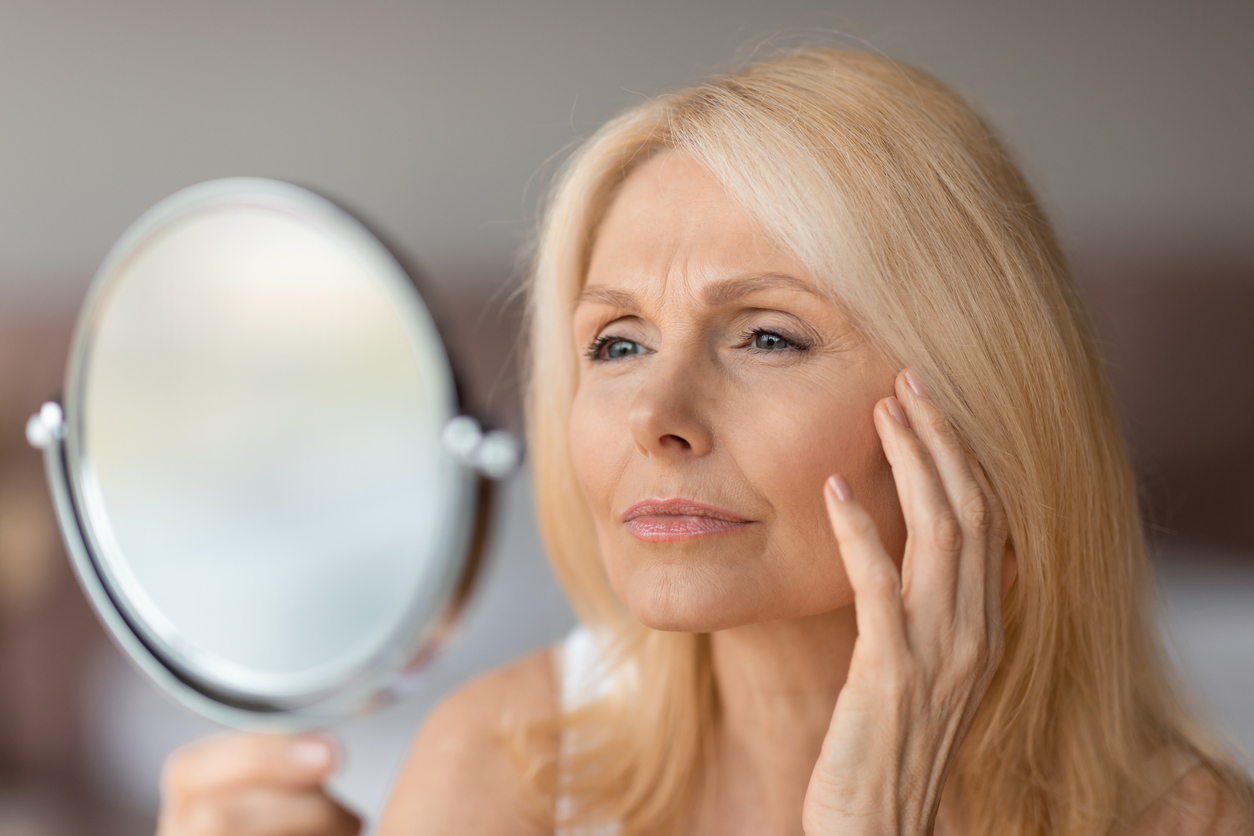
Weight loss can bring meaningful changes to the body, but some people are surprised to notice changes in the face as well. After losing a significant amount of weight, the cheeks may appear flatter, the skin may seem looser, and features such as the nasolabial folds, jowls, or hollows beneath the eyes may become more noticeable. In some cases, a person may feel healthier and more confident overall while simultaneously feeling that the face looks older than it did before the weight loss.
This does not necessarily mean that weight loss has actually accelerated the aging process. Rather, changes in facial volume, skin elasticity, and the underlying structures of the face can become more apparent after fat is lost. The degree of change can vary considerably from one person to another based on factors such as age, genetics, the amount of weight lost, skin quality, and the distribution of facial fat.
For patients experiencing these changes, understanding why the face can look older after weight loss is an important first step. Depending on the specific concerns, options may range from non-surgical facial rejuvenation and injectables to procedures designed to address loose skin and changes in the lower face and neck.
Why Weight Loss Can Change the Appearance of the Face
Facial aging is influenced by several factors rather than a single change. Over time, the skin becomes less elastic, facial volume changes, and the tissues supporting the face can shift. Significant weight loss can make some of these changes more visible because the face has less of the soft-tissue volume that previously filled and supported certain areas.
Fat is not distributed evenly throughout the face. Certain fat compartments contribute to fullness in the cheeks, temples, under-eye area, and other regions. When overall body fat decreases, facial fat can also decrease. Depending on a person's anatomy and where that volume is lost, the result may be a more hollow or deflated appearance.
At the same time, skin that has stretched over a larger amount of facial volume may not immediately, or completely, contract to its previous appearance. Skin elasticity varies from person to person, and aging, sun exposure, genetics, and the extent of weight loss can all influence how well skin adapts to changes in volume.
Common Facial Changes After Significant Weight Loss
Not everyone experiences the same changes after losing weight. Some people notice only subtle differences, while others experience more obvious changes in facial contour. Common concerns can include:
- Loss of cheek fullness: Reduced facial volume can make the cheeks appear flatter or less rounded.
- Hollowing: Areas such as the temples or beneath the eyes may appear more hollow when soft-tissue volume decreases.
- More noticeable facial folds: Lines and folds around the nose and mouth can become more apparent when surrounding volume is reduced.
- Jowls: Reduced volume combined with existing skin laxity can make sagging along the lower face more noticeable.
- Looser skin: Significant weight loss can leave excess or lax skin, particularly when skin elasticity is limited.
- A less defined jawline: Changes in volume and skin laxity can affect the transition between the face and neck.
- A more tired appearance: Volume loss around the cheeks, temples, and eyes can sometimes make the face appear less refreshed.
These changes can occur independently or together. For example, a patient may have relatively good skin quality but noticeable volume loss, while another patient may have both volume loss and significant laxity along the jawline and neck.
Facial Volume Loss Is Different From Loose Skin
One of the most important distinctions after weight loss is whether the primary concern involves a lack of volume, excess skin, or a combination of both.
Volume loss can make the face appear hollow or deflated. In appropriate patients, injectable treatments may be used to restore some of the volume that has been lost. Rosen Cosmetic Surgery offers dermal fillers such as Juvéderm and Restylane, as well as facial fat transfer. The practice explains that fillers can restore lost volume, while facial fat grafting uses the patient's own fat tissue to restore volume in selected areas.
Loose skin presents a different challenge. Injectable treatments can add volume, but they do not remove substantial excess skin. When laxity is concentrated in the lower face or neck, a surgical approach may be more appropriate depending on the patient's anatomy and goals.
| Primary Concern | What May Be Happening | Potential Treatment Category |
|---|---|---|
| Loss of facial fullness | Reduced soft-tissue volume may create a flatter or hollow appearance. | Dermal fillers or facial fat transfer may be considered in appropriate patients. |
| Fine lines and wrinkles | Changes in skin quality and facial movement can contribute to visible lines. | Injectables or facial rejuvenation treatments may be appropriate depending on the type of wrinkles. |
| Loose skin along the lower face | Reduced volume combined with reduced skin elasticity can contribute to sagging. | A facelift may be considered when surgical lifting is appropriate. |
| Loose skin around the neck | Skin laxity, tissue changes, and fat distribution can affect neck contour. | A neck lift or another procedure may be considered based on the underlying concern. |
| Uneven skin texture or sun-related changes | Weight loss does not directly cause these changes, but they may become more noticeable after volume changes. | Facial rejuvenation treatments such as chemical peels, laser resurfacing, IPL, or dermabrasion may be options. |
Can Facial Volume Loss Be Restored Without Surgery?
For patients whose primary concern is loss of facial fullness rather than significant excess skin, non-surgical treatments may provide an option. The appropriate treatment depends on which areas have lost volume and whether the patient also has wrinkles, skin-quality concerns, or laxity.
Dermal fillers can be used to address certain areas of volume loss. Rosen Cosmetic Surgery notes that Juvéderm is commonly used around the nose and mouth as well as in the lips and cheeks, while Restylane can address facial volume loss and wrinkles in selected areas. The practice also offers facial fat transfer, which uses the patient's own fat tissue to restore volume.
It is important to distinguish volume restoration from simply adding fullness. The goal of facial rejuvenation is not necessarily to recreate the fullness of a younger face or reverse every effect of weight loss. Treatment planning should account for the patient's existing facial proportions and the specific areas where volume has changed.
When Loose Skin Becomes the Main Concern
When weight loss reveals substantial skin laxity, adding volume alone may not adequately address the concern. This can be particularly noticeable around the jawline, jowls, and neck.
A facelift is designed to address signs of aging in the lower face and neck. According to Rosen Cosmetic Surgery, facelift surgery can address concerns including drooping jowls, deep facial creases or folds, loose excess skin, and fat deposits around the lower face and neck.
Dr. Brent Rosen is the surgeon associated with facelift care at the practice. His biography identifies him as board-certified in cosmetic surgery and facial plastic surgery, as well as head and neck surgery, and as a Diplomate of the American Board of Cosmetic Surgery. His post-residency training included an American Academy of Cosmetic Surgery fellowship focused exclusively on cosmetic surgery of the body and face. Dr. Brent Rosen's physician profile provides additional information about his education and surgical training.
For patients whose concerns are concentrated lower on the face, a facelift may help address laxity and contour changes that cannot be corrected through skincare or volume restoration alone. The appropriate surgical plan depends on the degree and location of tissue laxity, facial anatomy, skin quality, and the patient's goals.
What About Changes Under the Chin and Along the Neck?
Weight loss can also make changes around the chin and neck more noticeable. Some patients may have residual fat beneath the chin, while others may primarily have loose skin or lax tissues. These concerns require different approaches.
A neck lift is designed to address signs of aging in the neck and below the chin. Rosen Cosmetic Surgery describes concerns that may be addressed with a neck lift as including drooping jowls, neck creases or folds, loose excess skin on the neck, and fat deposits around the lower face and neck.
The practice also explains that several techniques may be used during neck rejuvenation. For patients with fat beneath the chin and adequate skin tone, neck liposuction may be an option. When muscle laxity or excess skin is a greater concern, other surgical techniques may be more appropriate.
Because these concerns can overlap, an evaluation is important before deciding whether the issue is primarily excess fat, loose skin, changes in the underlying tissues, or a combination of factors.
How Non-Surgical Facial Rejuvenation Fits Into the Picture
Not every change that becomes visible after weight loss requires surgery. Some patients are primarily concerned with skin texture, pigmentation, fine lines, or other surface-level changes. In those cases, facial rejuvenation treatments may be considered.
Rosen Cosmetic Surgery offers several facial rejuvenation options, including chemical peels, Erbium laser resurfacing, IPL, Pixel Fractionated Erbium Laser, and dermabrasion. These treatments address different aspects of skin quality and are not intended to replace a surgical lift when significant laxity is present.
This distinction is particularly important after weight loss. Improving skin texture can make the complexion look healthier and more refreshed, but resurfacing treatments generally do not remove significant excess skin or restore substantial lost facial volume. A treatment plan should therefore be based on the underlying cause of the visible change rather than simply treating the most noticeable symptom.
Does Everyone Look Older After Losing Weight?
No. Weight loss does not automatically make a person's face look older. Facial changes after weight loss vary widely, and many people experience an overall improvement in their appearance and well-being without significant facial concerns.
When an older or more tired appearance does occur, it may be related to the interaction between volume loss, existing skin laxity, facial anatomy, and the natural aging process. Someone who is younger and has good skin elasticity may experience relatively little loose skin, while someone with reduced elasticity may notice more pronounced changes after losing the same amount of weight.
The amount and speed of weight loss can also affect how noticeable the changes are, although individual responses differ. For that reason, there is no single amount of weight loss that guarantees facial aging or loose skin.
When Should Someone Consider Facial Rejuvenation After Weight Loss?
A consultation may be appropriate when facial changes remain bothersome after weight has stabilized and the person has a clear understanding of the concerns they want addressed. The goal of an evaluation is not necessarily to determine that surgery is needed. It is to identify what is contributing to the appearance and discuss options that are appropriate for that particular anatomy.
Depending on the findings, treatment may involve skincare or facial rejuvenation, injectables, a surgical procedure, or a combination of approaches. Rosen Cosmetic Surgery emphasizes individualized treatment planning and offers both surgical and non-surgical options for facial rejuvenation.
For surgical candidates, Dr. Rosen's approach is informed by his training in facial plastic surgery, head and neck surgery, and cosmetic surgery. The practice describes its philosophy as emphasizing naturalistic results that enhance existing features rather than creating an altered appearance.
Frequently Asked Questions About Facial Changes After Weight Loss
Why does weight loss make the face look gaunt?
Significant weight loss can reduce facial fat and soft-tissue volume. When volume decreases in the cheeks, temples, or other areas, the face may appear flatter or more hollow. The effect varies according to individual facial anatomy, age, skin elasticity, and the amount of weight lost.
Can weight loss cause sagging skin on the face?
Significant weight loss can make facial skin laxity more noticeable, particularly when the skin has limited elasticity. Weight loss itself is not the only factor involved. Age, genetics, sun exposure, and the natural aging process also influence skin elasticity and facial contour.
Can dermal fillers help after weight loss?
Dermal fillers may be appropriate for some patients who have experienced facial volume loss. Rosen Cosmetic Surgery offers Juvéderm and Restylane for selected concerns involving lost facial volume and wrinkles. Fillers are not designed to remove substantial excess skin, so patients with significant laxity may need to consider other options.
Can a facelift help after major weight loss?
A facelift may be considered when the primary concerns involve significant laxity, jowls, deep folds, or loose skin in the lower face and neck. The procedure is different from a volume-restoration treatment because it addresses sagging tissues and excess skin. Candidacy depends on the individual's anatomy, health, skin quality, and goals.
What if the main problem is loose skin around the neck?
A neck lift may be considered when loose skin, neck folds, jowls, or other changes below the chin are the primary concerns. Rosen Cosmetic Surgery also offers neck liposuction for selected patients who have excess fat beneath the chin and adequate skin tone. An examination can help determine which issue is contributing most to the appearance.
Can facial rejuvenation treatments improve the appearance of skin after weight loss?
Yes, depending on the concern. Chemical peels, laser resurfacing, IPL, Pixel Fractionated Erbium Laser, and dermabrasion are among the facial rejuvenation treatments offered by Rosen Cosmetic Surgery. These treatments are primarily directed at skin quality concerns rather than substantial facial volume loss or excess skin.
A Personalized Approach to Facial Changes After Weight Loss
A face that appears older after weight loss is often the result of several changes occurring at the same time. Reduced facial volume, skin laxity, changes in facial contours, and the natural aging process can interact in ways that are different for every patient.
Understanding whether the primary concern is volume loss, loose skin, skin quality, or a combination of factors can help guide treatment decisions. Rosen Cosmetic Surgery offers surgical and non-surgical facial rejuvenation options, allowing treatment planning to be tailored to the patient's individual anatomy and cosmetic goals. Patients interested in understanding the available options can learn more about facial cosmetic surgery at Rosen Cosmetic Surgery or discuss their concerns with Dr. Brent Rosen during a personalized consultation.